Balk

Blog: El Paraje de las Alpujarras and Sierra Nevada walks · nature · culture · events · publications · weather
blog by: El Paraje
Berchules, Granada, Spain
Showing posts with label publications. Show all posts

25 March 2011

GR142 online topo guide

We have made a GR142 special with all info we have on the subject. A permanent link to this Gr142 guide post can be found in the righthand column. Writing the special, we came across the GR 142 online topo guide, Senda de la Alpujarras Granadina y Almeriense (ADR Alpujarra - isbn 84-607-3904-X) (without the maps).
We have embedded it so that you can start browsing and reading straight away:


related key words:  trekking through the sierra nevada in spain, wandelen, wandelingen, wanderung, B&B, hotel in het dorp bérchules, trektocht, hiking,  standplaats vakantie, wandelvakanties in de alpujarras, holiday, urlaub und wandern in Andalusien spanien, vacances, gr142 book

24 February 2011

Senderos Locales Trevélez

In 2010 a number of local walks of Trevélez were newly waymarked and documented.
These are:
SL-A 78 ´Sendero del Peñabón´ a circular walk of 7.3 km 
SL-A 79 ´Sendero del Horcajo´ a linear walk of 8.7 km   
SL-A 80 ´Sendero del Puerto de Jérez´ a linear walk of 4 km   
SL-A 81 ´Sendero del Chorrillo´ a linear walk of 6.6 km 
Maps with (Spanish) description can be found in this PDF on the FEDAMON website

The small booklet ´Rutas por Trevélez´ is now available as well. In this publication information can be found on these four routes, but also on the ruta los tres barrios, Molino Altero, Siete Lagunas, GR-7 y Sulayr (GR-240), Mulhacén por el Chorrillo, Mulhacén por Siete Lagunas and Laguna de Vacares. This booklet can be obtained at the Ayuntamiento (958858501) or the Trevélez tourist information point (650039185).

Today we went up the Mulhacén using the route Sendero del Chorillo to reach the south ridge of the Mulhacén. The waymarking to find the start  of the SL-A81, the GR7 to Busquístar and the GR240 to Capileira has been improved. But from 2,200 metres to the Chorillo at 2,730 metres the waymarking is still poor. In the summer finding the track will not be a problem, but now only a few old posts can be seen above the snow. Without a GPS track we would not advise people that are not familiar with the route to go up with snow or limited visibility. Technically the route gave no problems today, but the route is steep and snowshoes or crampones were needed with the present amount of snow.
Going on to the Mulhacén summit over the ridge was a pure joy (apart from losing our wind :) with the fantastic weather we had today. On the photo we look back south to the Mulhacén II (3,361 m).
While walking  down from the Chorillo back to Trevélez, the soft melting snow required quite some concentration. To walk from Trevélez (1,500 m)  to the Mulhacén (3,482 m) and back, an average hiker should calculate 9 to 10 hours.


Related articles:
- El Paraje now has crampons available
- See all mulhacen related articles

Related links:
-Trevélez decide recuperar los caminos más representativos del Parque de Sierra Nevada, article written by Rafael Vílchez published in the Ideal 15-08-2010

Related key words: alpujarras, sierra nevada, wandelen, wandelingen, wanderung, B&B, hotel, bérchules, trektocht, hiking, trekking, standplaatsvakantie,wandelvakanties

19 December 2010

Coast to Coast Charity Walk from April 27th to May 17th 2011

One of the guide books in which our accommodation is mentioned is Walking in Andalucía by Gunter Hunter-Watts, a walking guide that covers the Alpujarra, Los Alcornocales, Aracena, La Axarquía, Cazorla and Grazalema. Over the last few years, the writer criss-crossed the mountains of southern Spain for another reason. The fruit of many years of research is a new guide book: The Andalucían Coast to Coast Walk - From the Mediterranean Sea to the Atlantic Ocean by way of Inland Spain.

In general we write posts on things related to the Alpujarra and Sierra Nevada, which is not the case of this walk from Maro (close to Nerja) to Bolonia (close to Tarifa). The reason why we do like to mention Guy´s new book is his initiative for a fundraising for children in Nepal. Yesterday we received an e-mail of the author with the announcement of a Coast to Coast Charity Walk that will take place from April 27th to May 17th 2011. Guy intends to do all 21 days of the walk and there are already a few people that signed up for the whole walk of 430 kilometres. Guy invites people to join him on the walk or to support the initiative by making a donation. More information can be found on the announcement of the charity walk and a sponsorship form and Coast to Coast on facebook.

Related keywords: Alpujarras, Sierra Nevada, wandelen, wandelingen, trektocht, standplaats vakantie, hiking, trekking, Berchules, B&B, hotel, wanderungen

29 July 2010

References on the local flora


We enjoy writing about the local wildlife as we are ourselves enchanted by how much the area with its unique biodiversity has to offer. Quite a number of texts on the local flora are written by Gabriel Blanca. This botanist and leading Spanish taxonomist is a professor at the University of Granada. He has dedicated part of his academic and scientific career to the study of the flora of eastern Andalusia and the study and conservation of endemic and threatened flora. An important publication that we often consult is Flora amenazada y endémica de Sierra Nevada (pdf 18MB), published by the Universidad de Granada in 2001. Many guidebooks like Guía de visita Parque Nacional Sierra Nevada count on his contributions. We hope that our posts on the local flora and fauna are appreciated by those interested in the natural heritage of the Sierra Nevada, but that do not know Spanish. We use the texts of Gabriel Blanca and his collaborators as a source of information for our ´flora posts´. An important reference to which we quite regularly make direct links are the texts Merche S. Calle and Juan Enrique Gómez, authors of the Guía de Plantas of the online magazine Waste. Another important source of information is the publication Flores Silvestres de Andalucía de Gabriel García Guardia, published by Editorial Rueda in 1988.

24 July 2010

Guía de visita Parque Nacional de Sierra Nevada

There are a number of publications available on the Parque Nacional de Sierra Nevada, but there is one that we think that deserves special attention. This is the Guía de Visita del Parque Nacional de Sierra Nevada, published in 2004. In its introduction we can read that the National Park of Sierra Nevada wants to offer visitors a handy guide that gives a complete and realistic picture of its natural, cultural and environmental values. "In this guide, visitors will find a detailed description of its infrastructures, visitor´s service points, suggestions for activities and itineraries that allows them to plan their visit and get the most out of it." We personally think that this guide offers a lot more than you expect after reading this introduction. The vital adaptations of the different species through their evolutional process over thousands of years are described for example. Natural and ecological features are explained in detail which gives visitors a very good idea of the complex interrelationships. Last week we wondered why we find the most exclusive botanical jewels in the peak areas where you would think that nothing could surive. We found the answer to this question in this guide. In fact there are many answers as each species has its special story to tell. As we will dedicate posts to the botanical jewels and the endemic fauna, we will certainly refer to this excellent visitor´s guide of the Sierra Nevada.


Related article:
- References on the local flora

Related links.
-website Parque Sierra Nevada

18 June 2010

La Alpujarra, la Andalucía secreta by Spahni revised and reprinted

We have come across a number of different designations of Jean-Christian Spahni: archaeologist, anthropologist, paleontologist, ethnologist and sociologist. Whatever his official profession, this Swiss traveler arrived in Granada in 1954 and spent some time in the Alpujarras. He was familiar with the work of Richard Ford who travelled as far as Ugíjar at the beginning of the XIX Century, with La Alpujarra of Pedro Antonio Alarcón, Sierra Nevada written by Fidel Fernández, a narration of José Guglieri published in 1953 and South from Granada of Gerald Brenan which was published in 1958.  Spahni enjoyed reading Al Sur de Granada, but accused Gerald Brenan of a lamentable ignorance of the region and its people as he did not take part in the different tasks and activities of daily life. Despite the number of publications, Spahni had the idea that there was still not one book that gave a complete and accurate picture of the Alpujarra. This is what challenged and encouraged him to write down his experiences. Editiones de la Baconnière, en Boudry (Switzerland) published Spahni´s writings in 1959: L´Alpujarra, Secrète Andalousie. Very few copies of this original version reached Granada. The brothers Horacio and Javier Roldán Barbero got hold of one fortuitously. After they had read this book, they had an interest in translating it into Spanish. They invited Spahni to revisit the area and consulted him on a few things. Thanks to their initiative, La Alpujarra, la Andalucía secreta was published in 1983. This first edition was out of print for many years. We personally got an idea of its importance by the number of quotations we read in other publications. Apart from this, we had come across texts and photographs from the book, as they can be found on different websites.

Thanks to an article in the Ideal we learned that fifty years after its first publication, Editiorial Comares revised and reprinted Spahni´s study of the Alpujarra. This second edition of La Alpujarra, la Andalucía secreta was presented at the Casa de los Tiros in Granada on Wednesday the 16th of June. We could not assist this presentation, but were able to get hold of a copy from the Librería Gallego in Órgiva.
In the epilogue the translators recall and compare the Alpujarra as it is now with the period that Jean-Christian Spahni lived in this region, more than fifty years go. They mention for example that in half a century the number of inhabitants diminished by more than fifty percent. The translators justify a reprint in the following way:  "Spahni provided us with a multitude of reasons to admire the region, to feel part of a project to retrieve a language. This was his legacy then, and it must remain so to this day."

18 May 2010

Rutas temáticas del Patrimonio Histórico en la Alpujarra Alta

A new publication of the ethnologist Agustín Sánchez Hita is a fact. This book Rutas Temáticas del Patrimonio Histórico – La Arquitectura Tradicional en la Alpujarra Alta was commissioned by the ADR Alpujarra-Sierra Nevada and presented in Pitres on Wednesday the third of May. This well documented guide gives suggestions for routes to get to know the natural and cultural heritage of a part of the high Alpujarra. Bérchules forms part of the high Alpujarra as well, but this guide comprises information on thirteen better known villages: Pampaneira, Bubión, Capileira, Pitres, Capilerilla, Mecina Fondales, Mecinilla, Fondales, Ferreirola, Atalbéitar, Pórtugos, Busquístar and Trevélez. In these villages there are new panels with information on the most interesting historic buildings or elements with a map to find them. Unfortunately there are no English translations of the texts for the visitors that can´t read Spanish. There are a limited number of copies available of Rutas Temáticas del Patrimonio Histórico that will be distributed amongst local libraries and town halls. We have this publication with thematic routes in the library of ´El Paraje´ and can make copies of parts of the book for the guests that would be interested.
Agustín Sánchez Hita is one of the speakers of the Jornadas sobre Paisaje y Patrimonio de la Alpujarra that are going to be held in Pitres the 11th and 12th of June. On Friday the 11th of June at 19.00 hours he will make up a critical balance of the present situation regarding the historical heritage of the Alpujarra.


Related articles:
El Patrimonio Histórico de la Alpujarra y Río Nacimiento

Related links:
- Article from the Ideal by Rafael Vílchez: La arquitectura y patrimonio histórico de la Alpujarra Alta son recopilados en una guía
- Blog de la Taha: nuevos paneles informativos

22 April 2010

El Patrimonio Histórico de la Alpujarra y Río Nacimiento

Today we like to dedicate a post to a publication that we think to be special: El Patrimonio Histórico de la Alpujarra y Río Nacimiento. It is a journey through the history, the landscape and the old community life in the Alpujarras, through its patrimony. It is written by the ethnologist Agustín Sánchez Hita and it was published by the ADR Alpujarra-Sierra Nevada (Asociación para la promoción económica y el Desarrollo Rural) in 2007. Last Sunday, we had the pleasure to be introduced to Agustín. He told us that for the ADR he is at the moment working on a route on the traditional arquitecture of the high Alpujarra: ´Arquitectura tradicional de la Alpujarra alta granadina´. Agustín is also the co-author of El Paisaje industrial en Andalucía. The excellent publication El Patrimonio Histórico de la Alpujarra y Río Nacimiento can not be found in any bookshop, but can be obtained for free through the office of the ADR in Laujar de Andarax or in Órgiva. According to Agustín there are not many copies left, so anybody interested in obtaining this publication should not wait too long in contacting the ADR: http://www.adr-alpujarra.com/.
ADR Laujar De Andarax
Plaza Mayor De Las Alpujarra, 1
950 51 41 61

ADR Órgiva‎
Calle de Lora Tamayo, 17
958 784 340‎


Related links:
- Article from the Ideal by Jaime Martín ´Un libro rescata el patrimonio olvidado de la Alpujarra´
- Article from the website arqueologia medieval with an index from the publication

31 March 2010

Visita de Ildefonso Falcones a Juviles

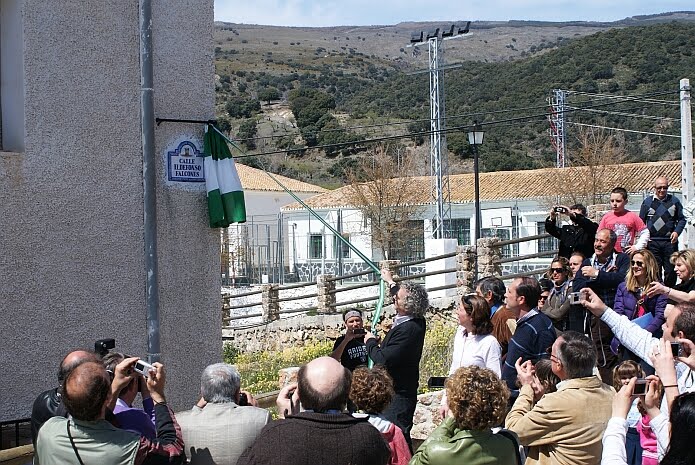
Guests that passed through Juviles today, saw the announcement that Ildefonso Falcones will visit this village this coming Saturday. Google could not help but the web of the town hall does mention it. Our guests were sure it was the 3rd of April. Juviles will dedicate a street to this author out of gratefulness that this village is receiving more visitors as the protagonist of his second historical novel La mano de Fátima, published in 2009, was born in this village. The story starts off with the uprising of the Moors in the Alpujarras in 1564. A large part of the book is situated in this area, and therefore more foreign visitors can be expected when this excellent novel becomes available in more languages.
The expected date for the English translation The hand of Fatima is according to Amazon the 19th of August. For the Dutch and Flemish readers of this blog, we would like to mention that the Dutch translation De hand van Fatima is due to come out on the 24th of May.
Idelfonso Falcones, internationally renowned for his bestseller La catedral del mar (The cathedral of the sea), will inaugurate the street that will be named after him at 14.00 hours. Calle Ildefonso Falcones is a new street that connects the Paseo de las Eras with the Edificio Cultural of Juviles.
P.S. This morning (the 1st of April) we found an article in the Ideal of Rafael Vílchez, confirming the 3rd of April or Sábado Santo.

Visita de Ildefonso Falcones a Juviles. Reconocimiento por parte del Excmo. Ayuntamiento


PS 3rd of April. And so it happened:
Ildefonso Falcones inaugurating his street in Juviles on the 3rd of April 2010 - photo: casa rural El Paraje

Ildefonso Falcones signing our copies of La mano de Fátima - photo: Encarni Barragán

Related links:
- Juviles dedicará una calle al escritor Ildefonso Falcones Ideal 20-10-09
- Los paisajes de la mano de Fátima, Toni Hill y Fernando Casal, Editorial Electa

related keywords: eventos, evenementen, evénements, veranstaltungen, publicatie, libros, books, boeken, livres, bücher

4 March 2010

English edition Sendero Sulayr or GR240

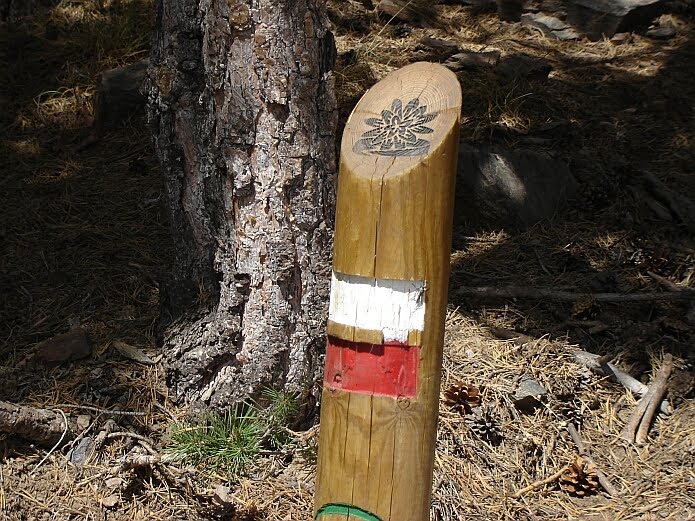
At the end of 2009, the Editorial Penibética published an English editition of the GR240, the Long Distance Footpath that circles the Sierra Nevada. Stanford in England and Pied-a-Terra in the Netherlands offer this book on-line.
The Sulayr is a circular LDP, of about 300 kilometres, which is divided into 19 sections. Most trail sections start or end in the middle-of-nowhere. You therefore need to be quite fit to walk the many extra kilometres to find accommodation if you do not want to camp high up. As far as we know, there are two organizations that offer guided or self-guided Sulayr walks; either the whole tour or sections of it. One is the Spanish company Nevadensis in Pampaneira and the other is the English company Spanish Highs based in Lanjarón.
For those who are interested in doing a part of the route on the southern slopes, we give a few ideas. Our suggestion would be to start in Capileira as this town can be reached by public transport. The first walking day you cover the beautiful section to Trevélez, a village with a wide choice of accommodations. We personally like hotel La Fragua as they also offer good food. From Trevélez it is 25 kilometres to the Loma de Lastonar. For those who find this too long, they could split this section up, by walking down to El Paraje from Hoya Herrera. Next morning we could take you up to this point from where you can walk on to the Loma de Lastonar. Our Dutch colleagues Yvonne and Jo of Casa Bombarón in Mecina Bombarón can pick you up at this point and bring you up again the morning after. They can do the same for the next section so that you could consider staying at their B&B for two nights. They like walking themselves and know the area above Mecina Bombarón well enough to give advise on the walks. Then we suggest you contact our English colleagues David and Emma of Las Chimeneas in Mairena to cover the sections that pass through the sierra above their village as they also offer 4x4 transfers. Las Chimeneas in Mairena is a gorgeous accommodation and their restaurant can certainly be recommended. You can contact us if you want to know the mileage that will be charged, or for any other questions you might have on this challenging LDP.
Wooden waymarker of the Sulayr with the symbol of this GR240, the estrella de las nieves - photo: casa rural El Paraje

Related links:
- articles on the GR240 on this weblog
- Sulayr information on the website of the Junta de Andalucía.

related keywords: senderismo, rutas, wandelen, wandelingen, randonnée, promenades, wandern, wanderungen, libros, books, boeken, livres, bücher

23 February 2010

Luces de Sulayr, images of Sierra Nevada

To celebrate the tenth anniversary of Sierra Nevada as National Park, there was an exhibition organised called ´Luces de Sulayr´ at the Centro Cultural de la Caja de Granada in Granada. ´Sulayr´ or ´Mountain of Sun´ as the Arabs called the Sierra Nevada has served as a source of inspiration for many artists, painters and writers. Apart from paintings, books and photographs, there is also a lot of unique material of botanists and cartographers. For the exhibition ´Lights of the Sulayr´ the most interesting images of the past five centuries were brought together. The exhibition was closed three weeks ago, but a virtual visit of ´Luces de Sulayr´ is still possible. This comprehensive website offers many paintings, photographs, soundtracks, maps and digitalised books from 16th century up to recent publications. To discover the content of this website is an adventure in it´s own and worth the effort. While glancing through one of the books, we came for example across this drawing of Bérchules from 1752! On this drawing the churches and mills can be observed, acequias and barrancos, but also the cultivated terraces like vineyards. This drawing is incorporated in the Álbum Cartográfico de Sierra Nevada 1606-1936 , by Javier Piñar and Manuel Titos (1995). Bérchules drawn in 1752, from the historic archive of the Granada Province

Related links.
-
exposition catalogue: Luces de Sulayr, cinco siglos en la imagen de sierra nevada (or catalogos de exposicion)

15 February 2010

Guia de vinos de Granada 2009

´Guia de vinos de Granada 2009´ is a wine guide of the Granada province that was published in 2009. It is a comprehensive guide with beautiful illustrations of Juan Antonio Martín Jáimez. The Alpujarra Granadina covers about two hundred of the four hundred pages. Almost all the local bodegas that can be found in a earlier blog article about Alpujarran wineries are covered in this guide. Of the different bodegas a description is given of the winery, wines, vineyards, tastings and recognitions. Distribution, address and website details can also be found in this guide.
Fundación Caja Rural de Granada
ISBN: 978-84-613-2168-1
tel. 958-242475

related keywords: wines, wijnen, vinos, vins, libros, books, boeken, livres, bücher weine,

2 February 2010

Guía Turística de la Alpujarra de Granada

Two weeks ago on the International Tourism Trade Fair, the Fitur in Madrid, the Granada tourist board presented a new publication ´Guía Turística de la Alpujarra de Granada´ - ´El Monte del Sol o La Alpujarra Mágica´.
Yesterday we met Antonio Jiménez Dumont, the chairman of the Mancomunidad de Municipios de la Alpujarra Granadina. He gave us a copy of this new guide. It is a comprehensive work of almost five hundred pages that comprises cultural and historical aspects and information on wildlife. Besides, it has a lot of useful touristic information like on all the signposted walking routes and all sorts of interesting thematic tours to get to know the area. Each village has got about six pages with background information, important telephone numbers and website links. As there are continously many new initiatives in the area like el Museo del Agua in Lanjarón and the Vía Verde walking route between Tímar and Lobras, it is a good thing that this new publication has been developed. Many images are not as up-to-date as the information, but this has probably be done to keep the cost down. Antonio couldn´t tell us yet what the price will be. We also don´t know when it will be available in the different tourist information centres in the Alpujarras and in the bookshops, but some time soon.

ISBN: 978-84-613-5519-8
Mancomunidad de Municipios de la Alpujarra Granadina 958 850521
http://www.alpujarraturistica.com/


PS About a month ago we found out that an English version has become available. We obtained a copy of the Guide Book to the Alpujarra of Granada from Pagamenos in Cádiar for 15,00 euros. The ISBN of the English publication is: 978-84-613-7416-8

1 April 2009

Publication on acequias "The ´Careos´ from Alpujarra"

There are two types of acequias to be found in the Alpujarras, there are ´acequias de riego´ irrigation canals and there are ´acequias de careo´. The ´acequias de careo´ fill aquifers so that the springs keep flowing in the dry months. At the same time they generate pastures - ´carear´ means to guide the livestock to graze - which explains the name of this type of canal. The ´Acequia de Mecina´, about which we wrote in our last post, is an ´acequia de careo´.
While looking for more information on acequias we found out that in December 2005 an interesting paper was written on the ´acequias de careo´ or ´careos´ canals as they are called in this essay. In 2006 an abstract of this Spanish thesis was published in the Revista de Ciencia, Tecnolgía y Medio Ambiente, called Technolgi@ y Desarrrollo. An English version of this paper on the ´careos´ can be found on the internet as well. The title of the Englis version is ´The ´careos´ from Alpujarra (Granada, Spain), a historical example of artificial recharge previous to XIII century applicable to the XXI century, characterization and inventory.´ This paper is written by A. Enrique Fernández Escalante, Manuel García Rodríguez and Fermín Villarroya Gil and arose from the Ph.D. thesis of the first author.
In the paper it is explained that these canals are traditionally dug in soils or rock, and are used like a technique for artificial recharge of aquifers in the Alpujarra area, mainly by means of waters of thaw of the Sierra Nevada range. It says that their origin goes back to at least the year 1139, but that its most extensive employment was reached in the last centuries of the Muslim time, XIII to XV centuries, when an intricate canilisation system was developed for the maximum use of the water. ´Careos´ canals facilitate the infiltration of the water. The water of the rivers and streams is diverted by these canals during the winter and the spring, to the flat areas where it infiltrates. Each canal has its areas of recharge called ´simas´ or ´cimas´. The investigators classified and defined a total of 23 ´careos´ canals. They state that the Acequia de Mecina is the largest to be found in the Sierra Nevada, that it is well-developed, well-conserved and that it has twenty ´simas´ were the water is distributed. One of the conclusions in the paper is: "It would be important to preserve and to maintain these systems of careos, given their high historical and environmental value." We think this paper to be very informative and we are glad that local authorities are each time more aware of the importance of these canals that have been operative for at least eight centuries. Since the declaration of Sierra Nevada as Parque Nacional y Natural in 1999, the program to recuperate the canals has been given high priority. "Where would we be without them?" in other words: ¡Si no fuera por ellas!, says the sign along the Acequia de Mecina.Sign along the Acequia de Mecina explains the importance of the canals with the exclamation ¡Si no fuera por ellas! - foto: casa rural El Paraje

12 March 2009

Publication ´El Sabor de la Alpujarra´

The Asociación para la Promoción Económica y el Desarrollo Rural de la Alpujarra-Sierra Nevada (ADR Alpujarra-Sierra Nevada) published ´El Sabor de la Alpujarra´, a beautiful book on the tastes and flavours of this region. There are chapters on the local wines, olive oil, meats, cured ham, cheeses, honey, bread, sweets and pastries. It has beautiful pictures, traditional recipes, useful addresses and a lot of information on all the tasty products from the Alpujarrra. Free copies can be obtained at the tourist information centre in Orgiva. There is also an online version available. Once the whole document has been loaded you can turn the pages by clicking at one of the corners. An apiarist collects honey from hives near Cortijo de las Minas above Bérchules at a height of 2,000 metres in the national park - foto: casa rural El Paraje

18 February 2009

Publication ´Senderos Locales de la Alpujarra´

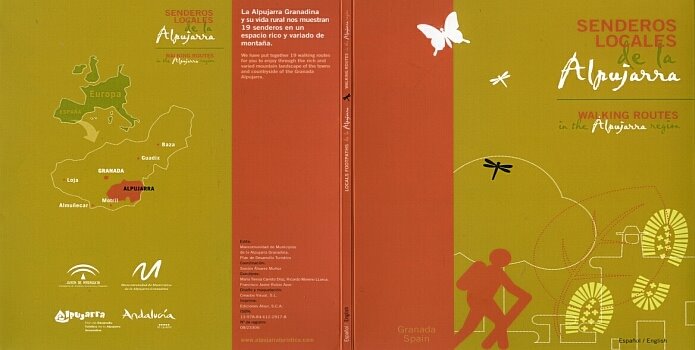
In the Alpujarras there is a network of Senderos Locales. You can find these yellow-and-white waymarked walks on maps and described in brochures of the different villages. A few years ago, they started to renew existing routes and also add new walks to the selection. The new signposting with green-and-white stripes and white arrows on wooden marker posts was finished some time ago. At the beginning of each route, there is a big information panel with a map and a short description of the route. Now the documentation is ready in the form of a guide and with information on all the walks on the website of Alpujarra Turística of the Mancomunidad. The website is only in Spanish and not all the information is correct. In each route description it says that the length of the walk is 2,5 kilometres and takes 45 minutes, but of course they all differ. The guide is bilingual and ´Walking routes in the Alpujarra region´ is its subtitle. Unfortunately there are many mistakes in the English texts. An ´era´ is translated as ´period´ instead of ´threshing circle´ for example. The guide has been distributed over the different town halls and tourist information points in the region, where they give them out for free. Only in the tourist office in Orgive they charge five euros for a copy. In previous posts we already mentioned the changes of two routes of Bérchules, the ´Junta de los Ríos´ and the ´Acequias´ and of the change of direction of the walk of Gerald Brenan walk in Yegen. Some routes like the ´Vereica Misa´ of Bérchules have been dropped of the list completely. We will try to comment on all the different routes in the course of time.

Senderos Locales de la Alpujarra or Senderos Loales de la Alpujarra - scan: casa rural El Paraje
This is the list of Senderos Locales in this publication. The links in this list, link to our blog posts on the particular walk.
Almegíjar - La Cuesta - 1,7 km linear
Almegíjar - Panjuila - 2,6 km linear
Bérchules - Acequia de Bérchules - 4,2 km circular
Bérchules - Junta de los Ríos - 9,5 km linear
Laroles - El Castaño - 8,7 km circular
Laroles - Joplón - 7,8 km circular
Mecina Bombarón - Acequia Alta - 2,5 km linear
Mecina Bombarón - Acequia Baja - 1,7 km linear
Mecina Tedel to Cojáyar - 2,7 km linear
Murtas - La Solana - 4,2 km circular
Órgiva - Los Mineros - 8,2 km circular
Pampaneira - La Atalaya - 8,2 km circular
Pitres to Ferreirola - 3 km linear
Torvizcón - Pedro Antonio de Alarcón - 8,3 km linear
Trevélez - Molino Altero - 2 km circular
Turón - Cabrahigo - 2,8 km linear
Túron - Chorillo - 4 km circular
Yegen - Gerald Brenan - 1,9 km circular
Yegen - La Salud - 3,6 km circular

13 February 2009

Publication on the ´Ruta Medieval´

A small guide has been published on the ´Ruta Medieval´, an interesting and attractive route that was waymarked in 2006. This is a linear short walking route through the historic site of the ´Alpujarra media´ and the Tahá valley. In this protected area there´s an extensive network of medieval paths. This route of 21 kilometres takes the walker on some paths that were already mentioned in documents drawn up in 1574. The route is divided in four parts and officially starts in Pórtugos and ends in Juviles. It passes through the villages of Atalbéitar, Ferreirola, Busquístar, Cástaras and Nieles. There are numerous signs on the route that give historic and cultural information on the water channels, the threshing floors, the steep paths, the mines and the old drover´s routes. This same information can be found on the website of Alpujarra Turística of the Mancomunidad and the GPS track of this PR-A 299 can be downloaded from this site as well. The information on the signs along the route, website and in the guide are only in Spanish. Several copies of this guide ´Huellas del medievo en la Alpujarra´ have been distributed over the different town halls and tourist information points to hand out for free to people interested. The tourist information office in Orgiva charges three euros for a copie, but all the information can be found on the website of Alpujarra Turística as well. Of course the route can be walked in both directions. For the people who would like to walk the Ruta Medieval from east to west, we have a map and description in Spanish, English and Dutch of the first three sections, up to Busquístar. Adding up the extra kilometres to get to Juviles, it is almost half a marathon from ´El Paraje´ to this village as well. There is also a small booklet for children on this route, called ´La Ruta de Mateo´, a copy can be asked for at the different town halls in the area.


Related links:
- gps track data on wikiloc by carlosgps