Balk
 | Blog: El Paraje de las Alpujarras and Sierra Nevada
walks · nature · culture · events · publications · weather
blog by:
El Paraje Berchules, Granada, Spain | 
|
20 March 2010
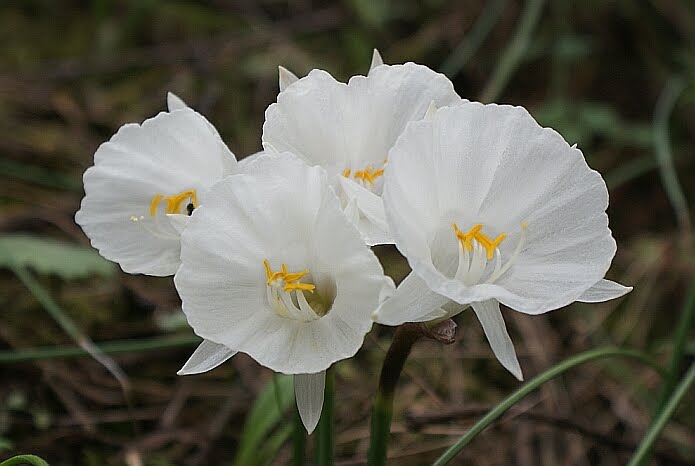
Narcissus Cantabricus
Today we felt like taking pictures of wild flowers that symbolize spring as this season starts officially tomorrow. For that reason we followed part of the pequeño recorrido PR 25 and the PR 32 in the Sierra de la Contraviesa towards Jorairátar, and we walked back on the GR142 through the Rambla de Repenil. Nature is further there, as the average altitude is about four hundreds metres lower than were we are at El Paraje. Right on leaving Cádiar, on the Collado de la Ventilla, we saw many graceful daffodils. It appeared to be the White Hoop-petticoat Daffodil. This trumpet-shaped low white narcissus can be found in Southeren Spain, the Balearic Islands and North-west Africa (Algeria and Marroco). It is therefore quite curious that this delicate flower carries the name Narcissus Cantabricus. Later we saw grape hyacinths, poppies and many other beautiful flowers, but the Narcissus Cantabricus remained our day favourite.

19 March 2010
Horseback riding with Virgen de las Nieves
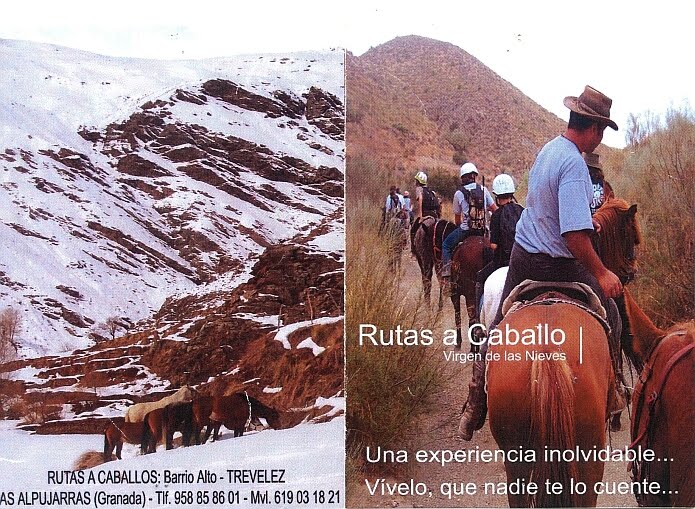
There have been a lot of horseback riding initiatives in the Alpujarras, but only a few survived over the years. For guests that would like an excursion of a few hours, our suggestion is Virgen de las Nieves in Trevélez. It is officially registered and insured, but you will not easily find anything on the Internet. The contact point is the small bar in the upper part or ´barrio alto´ of the village of Trevélez that has the same name. We offer their leaflet here below, but cannot link you to any website. This Spanish family will offer you a truly Alpujarran experience.
Rutas a caballo Virgen de las Nieves
Barrio alto de Trevélez
tel: 958 858601 mobile: 619 031821 (José Antonio)
Leaflet inside text:
Ven, cabalga con nosotros. Si ya sabes montar, disfruta de nuestros espléndidos caballos, pero si aún no has aprendido, déjate enseñar. Tenemos todo tipo de caballos. Dóciles, para aprender y rápidos para disfrutar; educados como niños, nobles y sencillos. Conocemos cada punto como si formase parte de nosotros. Por nuestras rutas discurren los paisajes más bellos jamás soñados, impressionantes montañas y cristalinos ríos se entrelazan entre perpetuos valles de forma maravillosa.
 Een nederlandse ervaring October 2010
Voor het opdoen van bijzondere paardrijervaringen is een verblijf in El Paraje zeer geschikt. Je kunt je mengen in de lokale bevolking en rondrijdend als een cowboy kun je genieten van de schitterende omgeving. Vanuit Berchules rij je in een half uur naar het hoogst gelegen dorp van Spanje, Trevelez. In het hoogst gelegen deel van het dorp (barrio alto) woont Jose Antonio, een local met hart voor zijn paarden. Hij heeft een stal met drie paarden. Je kunt (met handen en voeten en het telefoonnummer van El Paraje) duidelijke afspraken maken met betrekking tot het paardrijden. Antonio staat open voor alle suggesties en is erg zorgzaam, hij past de ritten aan op ieders wensen, ook als je al onderweg bent. De ritten variëren van een uur tot hele dagtochten van 8 uur. In alle gevallen ga je de bergen in. Je gaat (letterlijk en figuurlijk) door diepe dalen, langs steile afgronden, je steekt riviertjes over en je komt tot duizelingwekkende hoogten.
De ritten zijn voor ruiters van elk niveau toegankelijk. Voorwaarde is wel dat je goed moet kunnen zitten en dat je eventuele hoogtevrees kunt bedwingen. Het is zeker de moeite waard om eventuele angsten te overwinnen want het landschap is uniek en wanneer je één met je paard door de bergen rijdt waan je je alleen op aarde!
Regi en Peter
Related links:
- horse riding trail holidays with Dallas Love , Sierra Trails in Bubión
- horse riding per hour as well as trails with Cabalgar Rutas Alternativas in Bubión
- horse riding per hour as well as trails with Caballo Park in Soportujar
- lessons and trails with Caballo Blanco in Lanjarón
- lessons, riding per hour as well as trails with Camino Verde in Busquistar
related keywords: montar a caballo, paardrijden, équitation, reiten
Rutas a caballo Virgen de las Nieves
Barrio alto de Trevélez
tel: 958 858601 mobile: 619 031821 (José Antonio)
Leaflet inside text:
Ven, cabalga con nosotros. Si ya sabes montar, disfruta de nuestros espléndidos caballos, pero si aún no has aprendido, déjate enseñar. Tenemos todo tipo de caballos. Dóciles, para aprender y rápidos para disfrutar; educados como niños, nobles y sencillos. Conocemos cada punto como si formase parte de nosotros. Por nuestras rutas discurren los paisajes más bellos jamás soñados, impressionantes montañas y cristalinos ríos se entrelazan entre perpetuos valles de forma maravillosa.
Een nederlandse ervaring October 2010Voor het opdoen van bijzondere paardrijervaringen is een verblijf in El Paraje zeer geschikt. Je kunt je mengen in de lokale bevolking en rondrijdend als een cowboy kun je genieten van de schitterende omgeving. Vanuit Berchules rij je in een half uur naar het hoogst gelegen dorp van Spanje, Trevelez. In het hoogst gelegen deel van het dorp (barrio alto) woont Jose Antonio, een local met hart voor zijn paarden. Hij heeft een stal met drie paarden. Je kunt (met handen en voeten en het telefoonnummer van El Paraje) duidelijke afspraken maken met betrekking tot het paardrijden. Antonio staat open voor alle suggesties en is erg zorgzaam, hij past de ritten aan op ieders wensen, ook als je al onderweg bent. De ritten variëren van een uur tot hele dagtochten van 8 uur. In alle gevallen ga je de bergen in. Je gaat (letterlijk en figuurlijk) door diepe dalen, langs steile afgronden, je steekt riviertjes over en je komt tot duizelingwekkende hoogten.
De ritten zijn voor ruiters van elk niveau toegankelijk. Voorwaarde is wel dat je goed moet kunnen zitten en dat je eventuele hoogtevrees kunt bedwingen. Het is zeker de moeite waard om eventuele angsten te overwinnen want het landschap is uniek en wanneer je één met je paard door de bergen rijdt waan je je alleen op aarde!
Regi en Peter
Related links:
- horse riding trail holidays with Dallas Love , Sierra Trails in Bubión
- horse riding per hour as well as trails with Cabalgar Rutas Alternativas in Bubión
- horse riding per hour as well as trails with Caballo Park in Soportujar
- lessons and trails with Caballo Blanco in Lanjarón
- lessons, riding per hour as well as trails with Camino Verde in Busquistar
related keywords: montar a caballo, paardrijden, équitation, reiten
17 March 2010
New Alpujarras road map
There have been a few changes to the Alpujarras roads, which makes a new road map useful. The Granada - Motril highway A-44 has been finished and connected with the A-346 to Torvizcón. Works have been going on to improve and alter the route of the A-348 between Cádiar, Yátor and Ugíjar and to connect it with the A-347 to Berja. Last week the road between Cádiar and Ugíjar was opened.
The renovation of the A-348 from Torvizcón to Cádiar was already finished two years ago. It needs to be said though, that this road has suffered a lot of rain damage and that at some parts only one lane is available. The rest of the A-348 and the A346 doesn´t not give any problems.
Google maps is up-to-date concerning these roads but most paper maps and internet map scans reflect the old situation. We liked the old map because it was simple but it was not complete either. Besides, the road numbers changed a few years ago. Writing this article we realized that a correct map of the Alpujarras does not seem to exist. Even Google goes wrong on the small roads and you need to zoom in quite strongly to get them showed, losing the overview completely. The official Granada road map of the obras publicas of the Junta de Andalucia(pdf) is also far from complete. That is why we decided to edit this map ourselves to put in the connections for example between Nieles, Tímar and Lobras as wel as the road to El Golco. Please advise us on other corrections we should apply to the map below.
Click on the photo to enlarge it in a new window.

Related links:
- road condition information from DGT for Granada and Almería
related keywords: mapa, wegenkaart, carte routière, fahrplan
The renovation of the A-348 from Torvizcón to Cádiar was already finished two years ago. It needs to be said though, that this road has suffered a lot of rain damage and that at some parts only one lane is available. The rest of the A-348 and the A346 doesn´t not give any problems.
Google maps is up-to-date concerning these roads but most paper maps and internet map scans reflect the old situation. We liked the old map because it was simple but it was not complete either. Besides, the road numbers changed a few years ago. Writing this article we realized that a correct map of the Alpujarras does not seem to exist. Even Google goes wrong on the small roads and you need to zoom in quite strongly to get them showed, losing the overview completely. The official Granada road map of the obras publicas of the Junta de Andalucia(pdf) is also far from complete. That is why we decided to edit this map ourselves to put in the connections for example between Nieles, Tímar and Lobras as wel as the road to El Golco. Please advise us on other corrections we should apply to the map below.
Click on the photo to enlarge it in a new window.

Related links:
- road condition information from DGT for Granada and Almería
related keywords: mapa, wegenkaart, carte routière, fahrplan
16 March 2010
Introduction to the Alpujarras
This weblog started in July 2008 as an extension of the website of our country hotel in Bérchules. We decided to take the Alpujarras, our passions and informative value for potential visitors of the Alpujarras, as the scope for our articles.

As this weblog is growing and becoming an Alpujarras information source we realized that in this blog this region was not even properly introduced.
In this article we would like to correct this and therefor extracted the module Alpujarras from our website http://www.elparaje.com/ and added a permanent link to this article in the side column.
Use the pointing hand at the bottom right to go to the next page !!
(Iexplorer: CTRL F5 to reload skipping cache if needed)
The Alpujarra is a region with a variety of scenery of great natural beauty. It stretches from the Sierra Nevada in the north to the Mediterranean in the south, and from Lanjarón and the Sierra de Lújar in the west to Ohanes and Punta de las Entinas in the east. A little bit more than half of its surface is part of the Granada province, the rest of the Almería province.In the high Alpujarra you´ll find picturesque mountain villages, in the valleys and along the coast a few bigger towns and in the Contraviesa small hamlets scattered between vineyards.One of the most interesting aspects of the mountain villages is their vernacular arquitecture. Whitewashed cubic houses are built one above the other. These houses with their flat roofs and chimneys in the form of truncated cones, are built against steep slopes. Small passageways are created by the ´tinaos´ or porches that span narrow village streets.
This Alpujarran style of building cannot be found in any other part of Spain and was probably introduced by the Arabs.Archaelogical remains found in the Alpujarra region indicate that the origins of human settlement date back to 3500 B.C. Then the Phoenicians, Greek and Romans had successively occasional settlements near the coast, but probably not ventured far inland because of the difficult accessibility.
Nevertheless a few remains of the Roman period can be found, for example a bridge in Mecina Bombarón and cobbled paths and mines in La Taha.
The population reached its highest levels during the presence of the Arabs. They were the first to start building villages in the high Alpujarra. Of the fortresses that they built a few remains are left. But where they had once built mezquitas, churches arose after their expulsión, some in Mudejar style. The Arabs introduced new crops and a system of terraced farming. Their knowledge of irrigation techniques, making use of an extensive network of ´acequias´ or water channels, created a prosperous arboriculture and silk industry.
The Arabs had shown how to adapt one´s way of life to the surroundings. They had the ability to make use of the available water in such a way, that, amongst others, poplars, chestnuts and mulberry trees, could grow here. These ´semicultvated´ trees give the high Alpujarra its lush character up to today.
The low Alpujarra is characterized by beautiful groves of olives, figs, almond and and citrus trees.
The Sierra de la Contraviesa is the mountain range between the Sierra Nevada and the Mediterranean coast and is best known for its wines.De vineyards situated at nearly 1400 metres are among the highest to be found in Europe.It had been a wine producing region for many centuries until in 1833 the phylloxera almost made an end to it all. A few farmers planted resistent varieties of grapes, others replaced the vines for almond and fig trees, but a great many people left the area completely.Most farmers that had stayed, continued their family tradition of producing ´vino de la costa´, a young fruity rosé coloured wine on a small scale. Nevertheless, in the early eighties a few enterprising winegrowers rediscovered the area and started experimenting with quality varieties, as well as with the indigenous types like the vigiriego grape for the white wines. Thanks to the hard work and perseverence of these people its now also possible to enjoy quality wines and cava´s from the Alpujarra.
Related links:
- Tourist board alpujarras valle lecrín
- Alpujarras on Wikiperdia
- Comprehensive leaflet from the tourist board about the Alpujarras and Valle lecrín, in English
related keywords: introducción, inleiding , introduction, einfuhrung alpujarras, sierra nevada, wandelen, wandelingen, wanderung, B&B, hotel, berchules, trektocht, hiking, trekking, standplaats vakantie, wandelvakanties, holiday, urlaub, vacances
As this weblog is growing and becoming an Alpujarras information source we realized that in this blog this region was not even properly introduced.
In this article we would like to correct this and therefor extracted the module Alpujarras from our website http://www.elparaje.com/ and added a permanent link to this article in the side column.
Use the pointing hand at the bottom right to go to the next page !!
(Iexplorer: CTRL F5 to reload skipping cache if needed)
The Alpujarra is a region with a variety of scenery of great natural beauty. It stretches from the Sierra Nevada in the north to the Mediterranean in the south, and from Lanjarón and the Sierra de Lújar in the west to Ohanes and Punta de las Entinas in the east. A little bit more than half of its surface is part of the Granada province, the rest of the Almería province.In the high Alpujarra you´ll find picturesque mountain villages, in the valleys and along the coast a few bigger towns and in the Contraviesa small hamlets scattered between vineyards.One of the most interesting aspects of the mountain villages is their vernacular arquitecture. Whitewashed cubic houses are built one above the other. These houses with their flat roofs and chimneys in the form of truncated cones, are built against steep slopes. Small passageways are created by the ´tinaos´ or porches that span narrow village streets.
This Alpujarran style of building cannot be found in any other part of Spain and was probably introduced by the Arabs.Archaelogical remains found in the Alpujarra region indicate that the origins of human settlement date back to 3500 B.C. Then the Phoenicians, Greek and Romans had successively occasional settlements near the coast, but probably not ventured far inland because of the difficult accessibility.
Nevertheless a few remains of the Roman period can be found, for example a bridge in Mecina Bombarón and cobbled paths and mines in La Taha.
The population reached its highest levels during the presence of the Arabs. They were the first to start building villages in the high Alpujarra. Of the fortresses that they built a few remains are left. But where they had once built mezquitas, churches arose after their expulsión, some in Mudejar style. The Arabs introduced new crops and a system of terraced farming. Their knowledge of irrigation techniques, making use of an extensive network of ´acequias´ or water channels, created a prosperous arboriculture and silk industry.
The Arabs had shown how to adapt one´s way of life to the surroundings. They had the ability to make use of the available water in such a way, that, amongst others, poplars, chestnuts and mulberry trees, could grow here. These ´semicultvated´ trees give the high Alpujarra its lush character up to today.
The low Alpujarra is characterized by beautiful groves of olives, figs, almond and and citrus trees.
The Sierra de la Contraviesa is the mountain range between the Sierra Nevada and the Mediterranean coast and is best known for its wines.De vineyards situated at nearly 1400 metres are among the highest to be found in Europe.It had been a wine producing region for many centuries until in 1833 the phylloxera almost made an end to it all. A few farmers planted resistent varieties of grapes, others replaced the vines for almond and fig trees, but a great many people left the area completely.Most farmers that had stayed, continued their family tradition of producing ´vino de la costa´, a young fruity rosé coloured wine on a small scale. Nevertheless, in the early eighties a few enterprising winegrowers rediscovered the area and started experimenting with quality varieties, as well as with the indigenous types like the vigiriego grape for the white wines. Thanks to the hard work and perseverence of these people its now also possible to enjoy quality wines and cava´s from the Alpujarra.
Related links:
- Tourist board alpujarras valle lecrín
- Alpujarras on Wikiperdia
- Comprehensive leaflet from the tourist board about the Alpujarras and Valle lecrín, in English
related keywords: introducción, inleiding , introduction, einfuhrung alpujarras, sierra nevada, wandelen, wandelingen, wanderung, B&B, hotel, berchules, trektocht, hiking, trekking, standplaats vakantie, wandelvakanties, holiday, urlaub, vacances
14 March 2010
Music of the day (archive)
INTRODUCTION:
Regular visitors of our blog may have noticed the music of the day player in the side column.
The music of the day idea was born during the long wet winter of 2010. On the one hand, we like music and play a variety of Spanish and international music in our small guest house. On the other hand, we like to put our energy in our website and blog when the weather does not really permit us to be outside and check walks, work on the land or do maintenance on the house.
Over the years, and educated by guests our collection of classic and modern Spanish music has grown. Now we enjoy searching on the internet pieces of music that we play regularly and that we think to be special. By saving the music items in this archive and giving them links to performers and authors, we think that over a period of time a nice, El Paraje archive may grow.
We have chosen to cross the Alpujarras boundaries with the subject music.
THE TRADITIONAL MUSIC OF THE ALPUJARRAS:
The traditional Alpujarras music or ´musica tradicional de la Alpujarra´ is related to harvest songs, religious songs and songs of trades. In 2010 the Festival de musica tradicional de la Alpujarra will be organized in Almócita on the 8th of August. (see article)
Some we found on internet.
- a video of the performance of Grupo Zarzamora at the XXIV Festival de musica tradicional de la Alpujarra in Rubite 14th August 2005 (with a typical long alpujarran introduction!).
- music of this slideshow with musica tradicional alpujareña on alcolea.ning.com.
- 'El Pajarillo' Interpretada por el Centro de Educación de Adultos de Mecina (from http://www.taha.es/)
- 'Romance de Galán y García' Cantado por María Pérez Salguero, de Mecina (from http://www.taha.es/)
- Guitarras en la Alpujarra of Paco Santiago Gonzalez
- poster 2006
- videos taha musica de la alpujarra 2010 with taha choir ´los compadres´and more´
THE ARCHIVE:
play : Enrique Morente: Solea de la ciencia - flamenco
play : Michel Camilo y Tomatito: rom within - piano guitar jazz
play : Pancho Cespedes: vida loca - ballad
play : Miguel Poveda: buenas intenciones - flamenco
play : Niño Josele : when I fall in love - (acc. jazz guitar)
play : Estopa and Rosario : run run - popular
play : Malú: Diles - popular
play : Performer unknown: Danza espanola oriental Enrique Granados - classical piano
play : Amaral : El universo sobre mi - popular
play : Ismael Serrano : Ya nada es lo que era - ballad
play : Nina Pastori : Ave Maria -
play : Niño Josele : waltz for debby - (acc. jazz guitar)
play : Pata Negra : blues de los niños - (popular)
play : Rosana : Tormenta de arena - (popular) (songtext)
play : Manuel de Falla : danza del fuego - (classical music) (video1) (video2)
play : Nenan Daconte : tenia tanto que darte - (popular) (video)
play : Pepe Habichuela : Mi tierra - (flamenco guitar)
play : Tomatito : Dulce Manantial - (flamenco guitar with ´palmas´)
play : Diego el Cigala y Bebo Valdés: Lagimas Negras - (cuban flamenco fusion )
play : Anouar Brahem - Les Jardins de Ziryab - (modern arab lute )
play : Paco Peña y - Eduardo Falu - Danza cordobesa - (Spanish guitar)
play : Pablo y Manu - You had a bad day - (OT 2008 popular)
play : Montse Cortés and Vicente Amigo - Oda a la guitarra - (flamenco)
play : Paco Santiago Gonzalez - Choro de la Alpujarra - (guitar)
play : Anna Belén y Juan Valerrama - Envidia - (ballad)
play : Andres Segovia - Asturias (Isaac Albéniz) (classic spanish guitar)
play : Camarón de la isla y Paco de Lucia - Bulerias (flamenco)
play : Virginia Maestro - Lunas Rotas (ballad)
play : Alex Ubago - No te rindes (popular)
play : Eduardo Paniagua- Fiesta de Santa María (medieval)
play : Pasión Vega- Maria se bebe de las calles (ballad)
play : Sergio Dalma - No me digas que no (popular)
play : El Lebrijano with Orquestra Arabigo Andaluza (CD Casablanca)- Ay por dios (arabo - andalusian)
play : Narciso Yepes (orchestra unknown) - Concierto de Aranjuez (adagio) - composer: Joaquin Rodrigo (classical music) (see video)
play : Sabina - Y nos dieron las diez (popular ranchera)
play : Lola Flores - Ay, pena, penita pena (copla) (see video ! )
play : Gerardo Nuñez - A la Nana (lullaby) (non traditional flamenco guitar)
play : Miguel Poveda and Mariza - meu fado (fado -flamenco duet from the film Fado of Carlos Saura)
play : John Williams - recuerdo de la Alhambra, composer:Tárrega (classic Spanish guitar)
play : Chambao - ahí estas tú (popular) (more on listengo)
play : Rosana - el talismán (popular) (more on listengo)
play : Norbert Kraft - Sevilla, composer: Isaac Albéniz, (classical Spanish guitar)
play : Vicente Amigo - ciudad de las ideas (flamenco guitar) (see video on this blog) (more on listengo)
Related articles:
- Carlos Cano - Pasodoble Torero a Gerald Brenan
- Vicente Amigo guitarist
- Bebo y Cigala
Related links:
- The Alexander Music School in Ferreirola Alpujarras
- Guitarras en la Alpujarra - Paco Santiago Gonzalez
- Discografía Alpujarreña
- Ravenna Flamenco - a multimedia magazine for the anglophone flamenco guitar aficionado
- The flamenco world
related keywords: musica, muziek, musique, musik
Regular visitors of our blog may have noticed the music of the day player in the side column.
The music of the day idea was born during the long wet winter of 2010. On the one hand, we like music and play a variety of Spanish and international music in our small guest house. On the other hand, we like to put our energy in our website and blog when the weather does not really permit us to be outside and check walks, work on the land or do maintenance on the house.
Over the years, and educated by guests our collection of classic and modern Spanish music has grown. Now we enjoy searching on the internet pieces of music that we play regularly and that we think to be special. By saving the music items in this archive and giving them links to performers and authors, we think that over a period of time a nice, El Paraje archive may grow.
We have chosen to cross the Alpujarras boundaries with the subject music.
THE TRADITIONAL MUSIC OF THE ALPUJARRAS:
The traditional Alpujarras music or ´musica tradicional de la Alpujarra´ is related to harvest songs, religious songs and songs of trades. In 2010 the Festival de musica tradicional de la Alpujarra will be organized in Almócita on the 8th of August. (see article)
Some we found on internet.
- a video of the performance of Grupo Zarzamora at the XXIV Festival de musica tradicional de la Alpujarra in Rubite 14th August 2005 (with a typical long alpujarran introduction!).
- music of this slideshow with musica tradicional alpujareña on alcolea.ning.com.
- 'El Pajarillo' Interpretada por el Centro de Educación de Adultos de Mecina (from http://www.taha.es/)
- 'Romance de Galán y García' Cantado por María Pérez Salguero, de Mecina (from http://www.taha.es/)
- Guitarras en la Alpujarra of Paco Santiago Gonzalez
- poster 2006
- videos taha musica de la alpujarra 2010 with taha choir ´los compadres´and more´
THE ARCHIVE:
play : Enrique Morente: Solea de la ciencia - flamenco
play : Michel Camilo y Tomatito: rom within - piano guitar jazz
play : Pancho Cespedes: vida loca - ballad
play : Miguel Poveda: buenas intenciones - flamenco
play : Niño Josele : when I fall in love - (acc. jazz guitar)
play : Estopa and Rosario : run run - popular
play : Malú: Diles - popular
play : Performer unknown: Danza espanola oriental Enrique Granados - classical piano
play : Amaral : El universo sobre mi - popular
play : Ismael Serrano : Ya nada es lo que era - ballad
play : Nina Pastori : Ave Maria -
play : Niño Josele : waltz for debby - (acc. jazz guitar)
play : Pata Negra : blues de los niños - (popular)
play : Rosana : Tormenta de arena - (popular) (songtext)
play : Manuel de Falla : danza del fuego - (classical music) (video1) (video2)
play : Nenan Daconte : tenia tanto que darte - (popular) (video)
play : Pepe Habichuela : Mi tierra - (flamenco guitar)
play : Tomatito : Dulce Manantial - (flamenco guitar with ´palmas´)
play : Diego el Cigala y Bebo Valdés: Lagimas Negras - (cuban flamenco fusion )
play : Anouar Brahem - Les Jardins de Ziryab - (modern arab lute )
play : Paco Peña y - Eduardo Falu - Danza cordobesa - (Spanish guitar)
play : Pablo y Manu - You had a bad day - (OT 2008 popular)
play : Montse Cortés and Vicente Amigo - Oda a la guitarra - (flamenco)
play : Paco Santiago Gonzalez - Choro de la Alpujarra - (guitar)
play : Anna Belén y Juan Valerrama - Envidia - (ballad)
play : Andres Segovia - Asturias (Isaac Albéniz) (classic spanish guitar)
play : Camarón de la isla y Paco de Lucia - Bulerias (flamenco)
play : Virginia Maestro - Lunas Rotas (ballad)
play : Alex Ubago - No te rindes (popular)
play : Eduardo Paniagua- Fiesta de Santa María (medieval)
play : Pasión Vega- Maria se bebe de las calles (ballad)
play : Sergio Dalma - No me digas que no (popular)
play : El Lebrijano with Orquestra Arabigo Andaluza (CD Casablanca)- Ay por dios (arabo - andalusian)
play : Narciso Yepes (orchestra unknown) - Concierto de Aranjuez (adagio) - composer: Joaquin Rodrigo (classical music) (see video)
play : Sabina - Y nos dieron las diez (popular ranchera)
play : Lola Flores - Ay, pena, penita pena (copla) (see video ! )
play : Gerardo Nuñez - A la Nana (lullaby) (non traditional flamenco guitar)
play : Miguel Poveda and Mariza - meu fado (fado -flamenco duet from the film Fado of Carlos Saura)
play : John Williams - recuerdo de la Alhambra, composer:Tárrega (classic Spanish guitar)
play : Chambao - ahí estas tú (popular) (more on listengo)
play : Rosana - el talismán (popular) (more on listengo)
play : Norbert Kraft - Sevilla, composer: Isaac Albéniz, (classical Spanish guitar)
play : Vicente Amigo - ciudad de las ideas (flamenco guitar) (see video on this blog) (more on listengo)
Related articles:
- Carlos Cano - Pasodoble Torero a Gerald Brenan
- Vicente Amigo guitarist
- Bebo y Cigala
Related links:
- The Alexander Music School in Ferreirola Alpujarras
- Guitarras en la Alpujarra - Paco Santiago Gonzalez
- Discografía Alpujarreña
- Ravenna Flamenco - a multimedia magazine for the anglophone flamenco guitar aficionado
- The flamenco world
related keywords: musica, muziek, musique, musik
Subscribe to:
Posts (Atom)